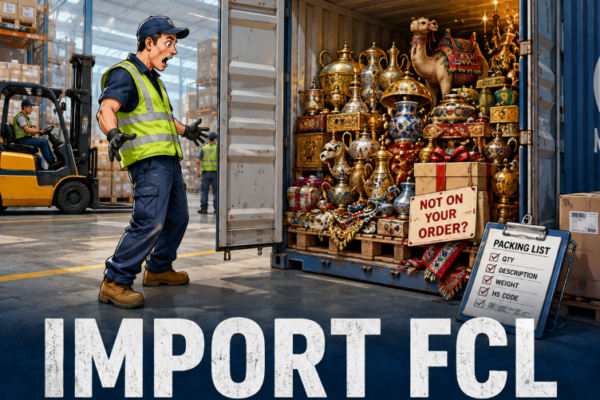
For an Australian importer, receiving a full container load (FCL) should be straightforward: you order the goods, your supplier packs the container, the shipping line transports it, and your freight forwarder arranges its arrival and clearance.
But what happens when you open the container and discover goods that you didn’t order — or, worse, goods that were not declared on the shipping documentation?
It can become a serious problem very quickly.
Who is responsible for what?
The first responsibility rests with the overseas supplier or shipper. They should know exactly what is being packed into the container and provide accurate information about the contents, including descriptions, quantities, weights and any goods subject to special import requirements.
The shipping line transports the sealed container based on the information supplied to it. In a conventional FCL shipment, the carrier generally does not know what is inside the container beyond the declarations provided by the shipper.
The freight forwarder acts as the link between the parties, arranging space, documentation and transport. A good forwarder should also ensure that the shipment is properly documented and that any unusual loading arrangements are referred to the appropriate parties.
The Australian importer, however, needs to take particular care. Under Australian customs law, an import declaration is a statement made by the importer or their licensed customs broker about the goods being imported. The Australian Border Force (ABF) makes it clear that the importer is responsible for ensuring that goods can legally be imported and that the relevant requirements are met.
This is where an apparently innocent mistake can become an expensive problem.
“Can we just put a few things in your container?”
If an overseas supplier asks whether they can put somebody else’s goods, promotional material or additional products into your FCL, don’t simply say yes.
Refer the request to your freight forwarder first.
Different cargo may require separate documentation, different tariff classifications, permits or biosecurity treatment. Even seemingly harmless gifts or promotional items can create problems. In the lead-up to Christmas in previous years, we have seen items such as glasses, metal champagne buckets, promotional tins and cheese knives added to containers. Depending on the circumstances, such items may introduce biosecurity or other border-control issues.
Australian importers are responsible for ensuring that their goods meet Australian requirements, and prohibited or restricted goods can be seized if the necessary permissions are not in place. (Australian Border Force Website)
Prevention is better than an expensive surprise
For regular suppliers with a proven track record, the risk may be relatively low. But where a supplier is new, the transaction is particularly valuable, or there is any doubt about what will be packed, consider appointing an independent surveyor or inspection company at the port of loading.
The surveyor can witness the loading, check the goods against the purchase order and packing list, photograph the contents and record the container and seal numbers.
That evidence can be extremely valuable if there is a dispute later.
It is equally important to appoint a reliable freight forwarder. Your forwarder should be involved before the container is packed, rather than simply being asked to find a vessel after everything has been arranged.
What if you discover the problem in Australia?
If the container has arrived and you discover goods that shouldn’t be there, don’t simply remove them and carry on.
Contact your customs broker or freight forwarder immediately and provide the purchase order, commercial invoice, packing list, photographs and any correspondence with the supplier. The appropriate course of action will depend on whether the goods have been declared, whether the container has cleared customs, and the nature of the additional goods.
Australian Customs legislation includes offences relating to false or misleading statements, including strict-liability provisions in certain circumstances. (Federal Register of Legislation)
If goods have not yet been properly entered, ABF may require them to be entered for home consumption or warehousing, and additional procedures may apply to prohibited or regulated goods.
Don’t try to solve the problem quietly. Establish the facts, preserve the evidence and seek professional advice before taking further action.
Talk to us before you ship
The best time to deal with an FCL problem is before the container is packed.
At Colless Young, we are Licensed Customs Brokers and International Freight Forwarders. We can advise on documentation, customs and quarantine requirements, arrange international freight and help you establish procedures to reduce the risk of receiving something in your container that shouldn’t be there.
Please also see this article from our archives: Top Tips…
If you are importing an FCL into Australia, talk to us before you place the order and before the container is packed.
Talk to Andrew at Colless Young 📞 +61 7 3890 0800 📧 enq@collessyoung.com.au