News

Rising Fuel Costs: Why They Matter to Importers and Exporters

When fuel prices rise, the effects are felt far beyond the petrol pump. For importers and exporters, higher fuel costs flow through almost every stage of the supply chain—from manufacturing and transport through to freight rates and the final landed cost of goods. Recent geopolitical tensions in the Middle East have demonstrated just how quickly […]

Exporting Your Cargo in Bags and Drums

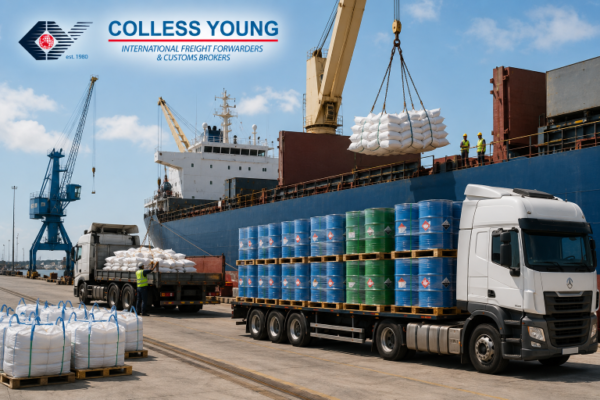
Not every export shipment belongs in a carton, crate or wooden case. Some of the world’s most important commodities—from coffee beans and grain to chemicals, oils and food ingredients—travel internationally in bags and drums. Choosing the correct packaging for these products is just as important as selecting the right shipping route, because the wrong packaging […]

The Second Half of 2026: Is Your Supply Chain Ready?

If Christmas seems a long way off, now is the time to start thinking about it. That may sound surprising in July, but experienced importers and exporters know that the second half of the year is when global supply chains face their greatest test. Businesses that plan ahead generally secure freight space, control costs, and […]

After the War: What Every Importer and Exporter Should Be Watching

The recent conflict involving Iran may have moved off the front pages, but for international shippers the effects are far from over. While the ceasefire has reduced immediate concerns about vessel safety in the Strait of Hormuz, global supply chains are still adjusting to the disruption. Importers and exporters should not assume that freight markets […]

Special Containers: The Next Evolution in Global Logistics

The international shipping industry has always been driven by innovation. From the introduction of standardised containers in the 1950s to today’s highly automated terminals and digital documentation systems, improvements in efficiency have transformed the way goods move around the world. One of the more interesting developments attracting attention in 2026 is the latest generation of […]

Choosing Air over Sea Freight in a Changing Logistics Landscape

Recent geopolitical tensions in the Middle East have once again reminded importers and exporters how quickly global supply chains can change. Disruptions affecting the Red Sea, Lebanon, Iran and the Strait of Hormuz have created uncertainty across major shipping routes, forcing many businesses to reconsider how they move their goods internationally. For some companies, the […]

Written Shipping Instruction – a Simple but Valuable Document

In international trade, a single missing detail can become an expensive mistake. A shipment may be booked, packed and ready to move, but if the instructions provided to the freight forwarder are incomplete or unclear, delays, additional costs and customs complications can quickly follow. In many cases, problems that occur later in the supply chain […]

Cambodia: An Emerging Opportunity for Australian Trade

When Australian businesses think about trading partners in Southeast Asia, countries such as Singapore, Indonesia and Vietnam often come to mind first. Yet another market is quietly building momentum and deserves closer attention: Cambodia. Recent high-level trade discussions between Australian and Cambodian leaders have highlighted the growing importance of the bilateral relationship and the significant […]

Shanghai: The Port That Powers Australia’s Trade with China

When Australian businesses think about importing from China, or exporting into the Chinese market, there is one gateway that matters more than any other: Shanghai. For 16 consecutive years, the Port of Shanghai has held the title of the world’s largest container port. In 2025 alone, it handled more than 55 million TEU (twenty-foot equivalent […]

The Benefits of the New ‘Trade Resilience Service’

Shipping disruptions are no longer something happening “somewhere else.” For many Australian exporters, the ongoing conflict in the Middle East is already translating into higher freight costs, reduced shipping capacity, insurance uncertainty, and difficult decisions about how—and even whether—to move cargo to overseas markets. Against this backdrop, the Australian Government has launched a new initiative […]