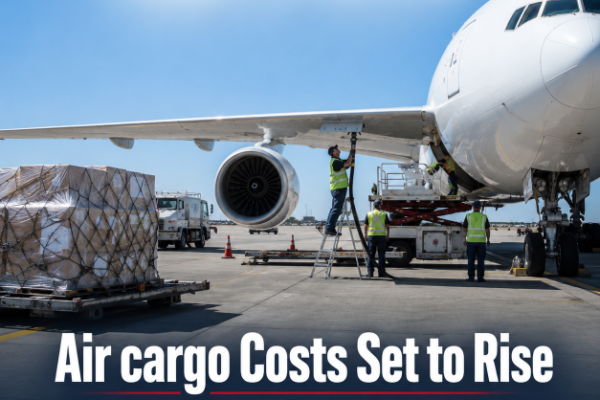
If your business relies on air freight, now is the time to prepare for higher costs. Industry analysts are warning that global air cargo rates could rise by as much as 15% as the conflict involving Iran continues to disrupt international aviation, placing fresh pressure on supply chains and shipping budgets.
The situation has changed rapidly. Airlines are avoiding Iranian and surrounding Middle Eastern airspace, forcing flights between Asia and Europe onto much longer routes. In some cases, journeys are taking up to four hours longer than normal. These extended flights require additional fuel, which means aircraft must carry heavier fuel loads and, in turn, less commercial cargo. The result is a significant reduction in available freight capacity at a time when demand remains strong.
Adding to the challenge, jet fuel prices have climbed sharply while war-risk insurance premiums have increased substantially. Airlines have little choice but to recover these additional operating costs through higher freight rates and fuel surcharges.
Several major cargo hubs across the Middle East have also experienced operational disruptions, affecting schedules and reducing the flexibility of global air freight networks. At the same time, delays to ocean shipping through the Red Sea and Strait of Hormuz have prompted many businesses to switch urgent shipments from sea freight to air freight, creating even greater demand for already limited cargo space.
The latest market forecasts reflect this dramatic shift. Earlier expectations that air freight contract rates would fall during 2026 have been completely reversed. Freight intelligence specialists now predict long-term contract rates could increase by between 5% and 15%, while spot market prices have already surged significantly as carriers struggle to match demand with available capacity.
Despite the disruption, global air cargo demand continues to grow. High-value products such as semiconductors, artificial intelligence hardware, pharmaceuticals and critical industrial components are keeping aircraft full, leaving less capacity available for general cargo. This imbalance between supply and demand is expected to keep rates elevated well into the coming months.
For importers and exporters, careful planning has never been more important. Businesses that leave bookings until the last minute may face limited capacity, premium pricing and longer transit times. Providing accurate shipment forecasts, booking cargo early and securing longer-term freight arrangements can help minimise exposure to volatile spot market rates. Maintaining adequate inventory levels can also reduce the need for expensive emergency shipments.
While global events cannot be controlled, businesses can reduce their impact by working with experienced logistics professionals who understand rapidly changing market conditions. The right transport solution may involve comparing air and sea freight options, selecting alternative routings or adjusting shipping schedules to achieve the best balance between cost, speed and reliability.
At Colless Young, we continually monitor international freight markets, airline capacity and rate movements to help our clients make informed shipping decisions. Whether you need urgent air freight, cost-effective alternatives or accurate landed cost estimates, our experienced team can provide practical advice tailored to your business.
Talk to Andrew at Colless Young to discuss the best way to transport your goods during this period of uncertainty. We can help you minimise the impact of rising freight costs while ensuring your cargo reaches its destination safely, efficiently and economically.
Also see this recent article: Rising Fuel Costs: Why They Matter to Importers and Exporters
📞 +61 7 3890 0800 📧 enq@collessyoung.com.au