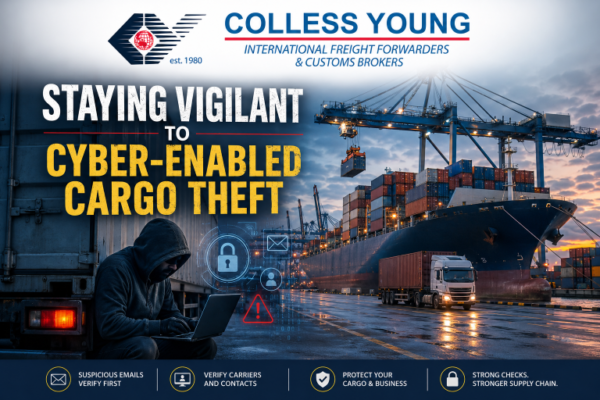
For many years, cargo theft meant criminals cutting locks, breaking into warehouses, or hijacking trucks. Today, however, the greatest threat to your shipment may arrive not at the warehouse gate—but in your inbox.
Cyber-enabled cargo theft is now one of the fastest-growing risks facing the international logistics industry. Criminal groups are increasingly using phishing emails, fake transport companies, compromised broker accounts, and sophisticated online impersonation tactics to steal cargo before it even reaches the port or warehouse.
Recent international reports estimate that cargo theft losses in North America surged by 60% during 2025, reaching approximately USD $725 million. Much of this increase has been linked to what authorities describe as “strategic cyber theft,” where criminals manipulate digital systems and documentation to redirect freight or impersonate legitimate supply chain operators.
While many of these reports originate overseas, the risks are highly relevant to Australian importers, exporters, customs brokers, and freight forwarders.
The logistics industry relies heavily on trust, documentation, and fast-moving communication. Freight forwarders and customs brokers sit at the centre of this network, coordinating shipping instructions, transport bookings, delivery orders, customs entries, and financial transactions. That makes the industry an attractive target for organised cybercrime.
One increasingly common tactic is known as double-brokering fraud. In this scheme, criminals pose as legitimate freight brokers using stolen identities or compromised credentials. They accept a transport booking, then secretly pass the load on to another unsuspecting carrier while diverting payment—or the cargo itself.
Other attacks involve phishing emails and fake websites designed to look almost identical to those of legitimate logistics companies. A single incorrect click can allow criminals to install remote access tools, compromise email accounts, or intercept shipment instructions.
Artificial intelligence is now adding another layer of sophistication. Fraudsters are using AI-generated documents, realistic email impersonation, and even cloned communication styles to appear genuine. In some cases, delivery destinations are changed only hours before cargo arrival, with forged documentation supporting the deception.
The concern is not limited to overseas markets. Here in Australia, industry bodies and financial institutions continue to warn about rising impersonation scams, ABN misuse, and identity “piggybacking,” where criminals exploit the reputation and credentials of legitimate businesses to facilitate unlawful trade activity.
Importers and exporters should remain alert to several warning signs:
- Emails arriving from slightly altered web domains or unusual addresses
- Sudden requests to change delivery locations or banking details
- Pressure to act urgently without standard verification procedures
- Requests to download documents from unfamiliar links
- Unusual behaviour from supposedly trusted contacts
Fortunately, there are practical steps businesses can take to reduce their exposure.
Across the industry, stronger verification processes are becoming essential. Multi-factor authentication (MFA) on logistics and email systems is now regarded as a minimum standard. Rigorous carrier vetting, verification of contact details, and cross-checking delivery instructions are increasingly important safeguards.
Real-time GPS tracking of cargo is also becoming more common, particularly for high-value consignments such as electronics, pharmaceuticals, metals, and consumer goods.
Most importantly, businesses should work closely with experienced logistics partners who understand both the operational and cyber-security aspects of modern freight movement.
At Colless Young, protecting our clients’ interests has always been central to what we do. With 46 years of experience across international supply chains, we apply strict verification procedures and maintain close oversight of shipping instructions, documentation, and communication channels. When suspicious activity arises, we act quickly to investigate and, where necessary, involve the appropriate authorities.
The global supply chain is changing rapidly, and cyber threats are now part of the landscape. Awareness, vigilance, and strong partnerships are the best defence.
If you have concerns about your cargo, shipping documents, or suspicious communications relating to your consignments, contact us without delay.
📞 Talk to Andrew: +61 7 3890 0800 📧 enq@collessyoung.com.au
Together, we can help keep your cargo—and your business—secure.