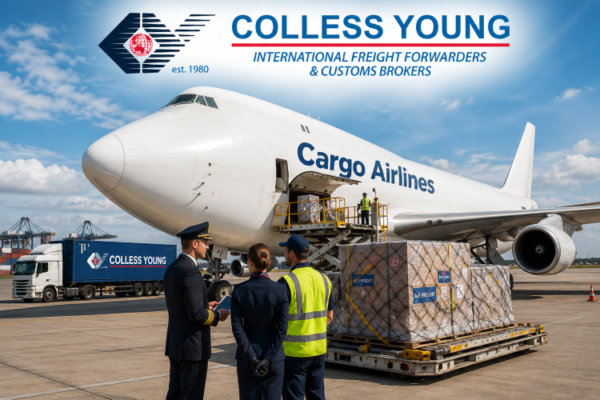
Recent geopolitical tensions in the Middle East have once again reminded importers and exporters how quickly global supply chains can change. Disruptions affecting the Red Sea, Lebanon, Iran and the Strait of Hormuz have created uncertainty across major shipping routes, forcing many businesses to reconsider how they move their goods internationally.
For some companies, the immediate response has been to shift urgent cargo from sea freight to air freight. While this can be an effective solution, it is not always as straightforward as it sounds. Understanding when to switch—and when to stay with ocean freight—has become an important business decision for exporters, importers and supply chain managers alike.
The latest disruptions have had a dramatic impact on international shipping. Vessel diversions, longer transit times, increased insurance costs and congestion at alternative ports have affected cargo moving between Asia, Europe and the Middle East. For businesses operating on tight schedules, these delays can threaten production timelines, product launches and customer commitments.
As a result, many shippers have looked to air freight as a faster alternative.
Traditionally, air freight has been the preferred choice for high-value, time-sensitive or perishable cargo. Fresh produce, pharmaceuticals, electronics, medical equipment and urgent spare parts are all examples of products where speed is often more important than transport cost.
However, the current situation presents a unique challenge. While ocean freight disruptions have encouraged businesses to move cargo by air, the aviation sector has also been affected by regional conflict. Airspace restrictions and route diversions have forced airlines to take longer flight paths, increasing fuel consumption and reducing available cargo capacity. In some cases, major air cargo hubs have experienced flight cancellations or operational restrictions, creating bottlenecks across global freight networks.
The result has been sharply higher air freight rates and reduced space availability.
This raises an important question: when does it make sense to switch from sea freight to air freight?
The answer depends on several factors.
First, consider the value of the cargo. High-value goods often justify the additional freight cost because the transport expense represents only a small percentage of the product’s overall value. For lower-value products, the additional freight charges may significantly erode profit margins.
Second, consider the consequences of delay. If a shipment arriving late could halt a production line, leave retail shelves empty, breach a contract, or jeopardise an important customer relationship, the premium for air freight may be justified.
Third, examine shipment size and weight. Sea freight generally remains the most economical solution for large volumes, full container loads, heavy machinery and oversized cargo. Container vessels offer enormous capacity and are usually less affected by the weight restrictions that apply to aircraft.
Businesses should also evaluate the predictability of their supply chain. Companies with accurate forecasting and longer planning horizons can often absorb temporary shipping disruptions more effectively through ocean freight. Businesses operating in highly competitive markets with rapidly changing demand may require the flexibility and speed that air freight provides.
There is also a growing middle ground between the two options. Sea-air solutions, where cargo travels by sea for part of the journey and then by air for the final leg, are becoming increasingly popular. These multimodal services can significantly reduce transit times while controlling costs compared with a full air freight movement.
Ultimately, there is no universal answer. Every shipment is different, and the best solution depends on balancing cost, speed, reliability and risk.
What is clear is that geopolitical events continue to influence freight markets worldwide. Businesses that regularly review their logistics strategies and remain flexible in their transport choices are often best positioned to maintain customer service levels and protect profitability during periods of disruption.
At Colless Young, we provide both international air freight and sea freight services and can help you assess the most suitable option for each shipment. Whether you are facing tight delivery deadlines, rising freight costs or uncertainty surrounding current shipping routes, our experienced team can provide practical advice, rate comparisons and schedule information to help you make informed decisions.
Also see this article from our archives: Air Freight vs Sea Freight – When to Switch
Before committing to your next shipment, talk to us about the available options.
Contact Andrew at Colless Young 📞 +61 7 3890 0800 📧 enq@collessyoung.com.au
With decades of experience in international freight forwarding and customs brokerage, we can help keep your cargo moving—whatever challenges arise in the global logistics landscape.