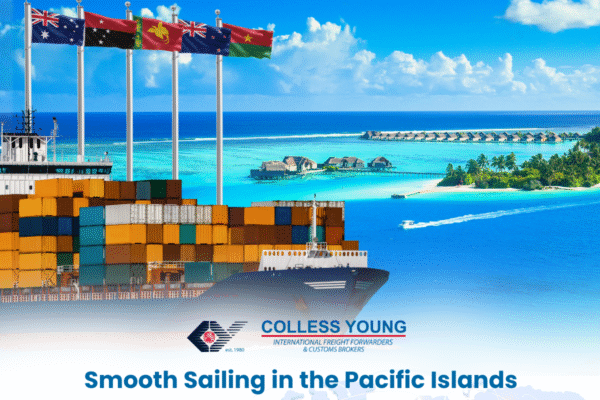
Our Pacific Island neighbours have been in the news lately on matters of climate change and defence but, as always, the issues closest to our heart concern imports and exports.
There are trade opportunities in both directions which are facilitated by a number of regional agreements, but it is important to make sure you have all the correct formalities and paperwork in place, to gain the full benefit of trade deals and avoid penalties.
Australia imports a wide range of products from the Pacific Islands, including resources like gold from Papua New Guinea, agricultural goods such as coconut oil and tuna, and a variety of manufactured and consumer goods like electronics, machinery parts, and kava.
Our traditional exports include industrial machinery, vehicles and agriculture. There is potential for other industries such as renewable energies, technologies and construction. Total exports to the Pacific, excluding New Zealand, are small but now exceed $5 billion annually.
Australia’s trade with the South Pacific is dominated by its relationship with Papua New Guinea, which accounts for about 80% of total trade with the region. Fiji and New Caledonia are the next most significant partners.
Australia engages with the Pacific Islands Forum (PIF) on trade through various initiatives, including providing financial and technical assistance to support regional trade agreements—like PACER Plus—and to help countries comply with market requirements.
PACER Plus (the Pacific Agreement on Closer Economic Relations Plus) is a development-centred free trade agreement that entered into force in 2020. New Zealand, Australia, Samoa, Tuvalu, Kiribati, Tonga, Solomon Islands, Niue, Vanuatu and Cook Islands are Parties to the Agreement. Nauru has signed up for the deal but has not ratified.
The South Pacific Regional Trade and Economic Co-operation Agreement (SPARTECA) is a nonreciprocal trade agreement in which Australia and New Zealand offer duty-free and unrestricted access for specified products originating from the developing island member countries of the Pacific Islands Forum.
Under the existing SPARTECA arrangements, goods can enter Australia duty free where the ‘Allowable Factory Cost’ is greater than or equal to 50% of the total ex-factory cost of manufacturing the goods.
Opportunities for Australian exporters:
– Initiatives like the REnew Pacific program provide grants for renewable energy projects, and the Australian Infrastructure Financing Facility for the Pacific supports development.
– Tourism sector: Demand for food, beverages, and other goods and services is expected to increase, corresponding to the post-pandemic recovery in tourism.
– Construction: Significant opportunities exist for construction and building trades to support infrastructure and commercial property development.
– Health: There is potential for increased demand for health services and supplies.
– Fintech: Partnerships are emerging to provide digital payment systems to small businesses.
To find out more about the programmes that exist between Australia and the South Pacific Islands, talk to us here at Colless Young. Our comprehensive network covers all the ports and airports of the Pacific region, both import and export. Our experienced staff can explain how to gain maximum benefit from agreements that are already in place—contact Andrew, Tel: +61 7 3890 0800 email enq@collessyoung.com.au