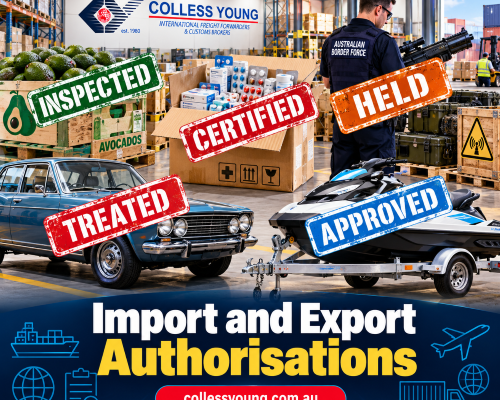
Think importing or exporting is simply a matter of booking freight and clearing Customs? Think again!
For many businesses, the Australian Border Force (ABF) and the Department of Agriculture, Fisheries and Forestry (DAFF) are the two familiar names when it comes to international shipping. But depending on what you are importing or exporting, they may be just the beginning of the journey.
Other government departments, regulators and industry bodies can become involved, each with its own requirements, permits, inspections and paperwork. Discovering this after your cargo is on the water can mean costly delays, storage charges and, in some cases, having to return goods overseas.
The golden rule? If you are shipping a product for the first time, seek advice before you ship.
One product, several authorities
Consider importing a motor vehicle, motorcycle, caravan or boat. Customs clearance is only one part of the process. A vehicle import approval may be required before the vehicle is shipped, while biosecurity inspections can be necessary to ensure it is free of soil, seeds and other contamination. Depending on the circumstances, additional requirements may apply to equipment such as air-conditioning systems. Getting the sequence wrong can be expensive.
Other products bring their own challenges. Therapeutic goods, including certain medicines and medical devices, may require approval or compliance with requirements administered by the Therapeutic Goods Administration (TGA). Weapons and other controlled goods can be subject to additional restrictions and permits.
Food and agricultural products are another area where assumptions can be dangerous. Imported seafood, for example, must meet applicable biosecurity conditions, while exporting Australian seafood, fruit and vegetables can involve export certification and importing-country requirements. Organic certification may introduce another layer of documentation for exporters seeking to meet particular market requirements.
Wildlife products can be even more complicated. Depending on the species and circumstances, international trade may require permits under the Convention on International Trade in Endangered Species of Wild Fauna and Flora (CITES), as well as compliance with Australian wildlife-trade controls.
These are just a few examples. The important point is that the product itself determines which rules apply.
Exporting has its own maze
Exporters also need to look beyond booking a vessel or aircraft. Some goods are subject to specific export controls, inspection or certification requirements. Defence-related goods and certain technologies, for instance, can require export permits.
Certificates of Origin may also be needed to support an overseas buyer’s customs clearance or a claim for preferential tariff treatment under a free trade agreement. These certificates are commonly issued through authorised organisations, such as Chambers of Commerce, depending on the arrangement involved.
Businesses exploring new overseas markets may also wish to investigate government export assistance. Austrade administers the Export Market Development Grants (EMDG) program, subject to its current eligibility requirements and guidelines.
Your freight forwarder is your first port of call
Naturally, you cannot be expected to know every government department, regulator or certification body that might become involved in your shipment. But you can avoid being caught out by asking the right questions early.
At Colless Young, we help importers and exporters identify the requirements relevant to their cargo, coordinate Customs clearance and biosecurity procedures, and assist with the permits, certificates and other documentation needed for the shipment. Where specialist approvals are required, we can help you navigate the appropriate channels.
Every shipment is different, and the earlier potential requirements are identified, the better your chances of avoiding unnecessary costs and disruption.
Also see this related article from our archives: What Goods are Prohibited Imports to Australia
Before you ship, talk to Colless Young. Let us help you navigate the maze before it becomes a problem. Call Andrew 📞 +61 7 3890 0800 📧 enq@collessyoung.com.au